Weeks 5 - 7 of the Internship Rotation Period
- Laura C

- Oct 20, 2023
- 3 min read
During weeks five and six of the rotation period, I was assigned to the aquaponics concentration under the guidance of Jessie. The aquaponics operation is a major revenue source for the Farm, producing lettuces for both wholesale and retail markets. Wholesale lettuces are supplied to restaurants, including sister business, Noble Crust, while retail lettuces are sold directly to customers and used in FBF's restaurant.

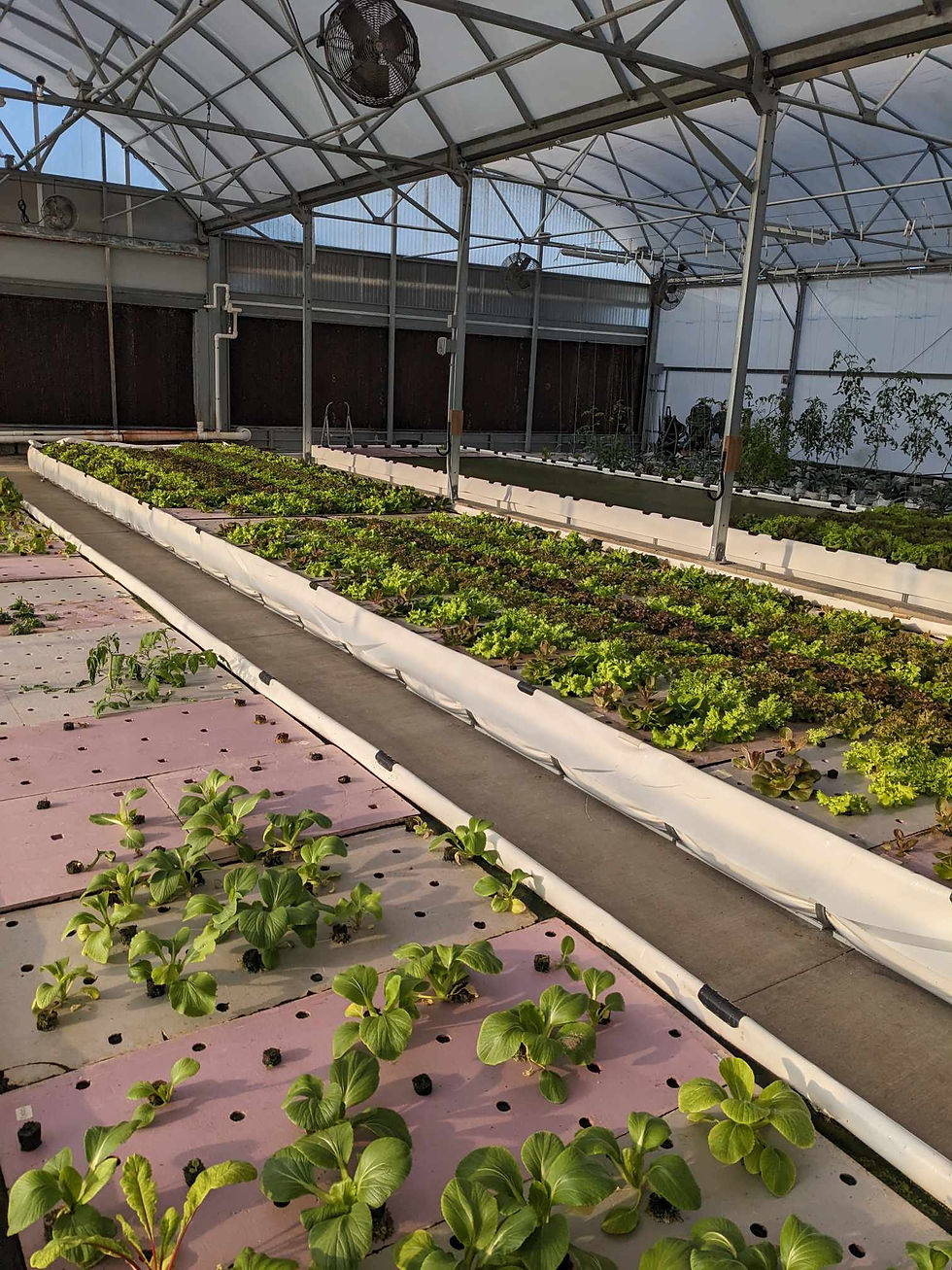
Jessie provided a comprehensive overview of FBF's aquaponics system, which relies on two tanks of tilapia fish. The ammonia byproducts from the fish undergo nitrification in separate tanks, and the resulting nitrate-rich water is circulated through channels where the lettuces grow on floating boards. My responsibilities in the aquaponics sector encompassed seeding, planting, general maintenance, and product preparation for sale. Each task was meticulous and methodical, with the aim of meeting predetermined plant numbers to ensure projected profitability. Seeding activities were conducted in the microgreens room, given the interconnected nature of aquaponics and microgreens operations. Seeds were placed in biodegradable mediums in tray cells and stored in the microgreens room until mature enough for transplant. The seedlings were watered directly from the fish tanks.
Plants ready for transplant were placed on reusable foam boards, which floated on the channels. Harvesting and cutting of mature lettuces were performed by other staff during the week, and the harvested produce was stored in a walk-in fridge for final preparation and distribution. This included weighing and packaging different lettuce mixtures, date and product stamping on bags, and organization in the Farm kitchen for retail sales.



Lettuce sprouts (left) Lettuce varieties mapped into Planted boards floating in channels
Empty seeding mediums (right) reusable foam boards
Today, which marks week seven of the rotation period, I worked in the microgreens concentration under the guidance of Megan. I will have another opportunity to work in the microgreens concentration next week before selecting my primary concentration for the remainder of the internship program. Next week's rotation will focus on the business aspects of microgreens, where I will be developing a plan for a microgreens company.
Today's job duties were similar to those in aquaponics, involving seeding, maintenance, harvesting, and packaging. Seeding included two methods: placing germinated seeds on trays filled with potting soil and using jute mats as a growing medium. In both cases, trays were covered for a period to create favorable conditions, simulating soil coverage. This process, known as blanching, promoted stem elongation as seedlings searched for light. Once low-light conditions were no longer needed, grow lights above the trays encouraged upright growth and photosynthesis, giving the plants vibrant colors. Harvested plants were cut, similar to how one would trim hair, weighed, and placed in marked containers, which were then organized in the kitchen for sale.




Freshly uncovered shoots are pale in color and do not growing upright; however, the stems are optimally elongated and prepared for the final stages of growth

In addition to the specific aquaponics and microgreens tasks, I also contributed to other maintenance operations aimed at advancing FBF's sustainability initiatives. For instance, the microgreens operation generated compost from old soil, jute mats, and unharvested stems and seeds. I transported these byproducts to the chicken coop, where they served as both feed for the chickens to minimize waste and a means to enrich the property's soil quality.
Furthermore, I participated in the maintenance of the Farm's growing food forest, which includes moringa, cranberry hibiscus, banana, fig, papaya, and other edible plants. As part of this sustainability initiative, the team and I landscaped a mulch barrier to create an ideal environment for the plants. The mulch barrier supports healthy soil by reducing erosion risk, temperature fluctuations, and compaction, while conserving water by minimizing evaporation.

Comments